
Blog
Pool Contractor left Women in a Hole
A local Burleson women was left with just a hole after her contractor vanished with $7,000 of upfront money. The contractor had no license and never pulled a permit with the city. This story should make everyone realize how important it is to do your research on the contractors your hire. Find out as much as possible about your contractor. Have everything in writing. Think about why a contractor would need upfront money, because he has none!!
· Don’t pay large upfront fees. One of the most common complaints BBB receives against contractors is paying a substantial portion of the total cost upfront and not having the work completed. Work with the contractor ahead of time to agree upon a timeframe to make payments that coincide with the progress of the project.
· Read the contract carefully. The contract should include details of all work to be completed and the specific cost of all materials to be used. Consumers should verify the work has been completed and that all subcontractors and suppliers have been paid before making the final payment. Request a signed lien waiver stating the contractor has received payment.
· Verify licensing and insurance. Make sure the company is insured against claims covering worker’s compensation, property damage and personal liability in case of accidents. Further, some contractors must meet licensing and bonding requirements set by the state, county or city housing authority. Confirm these details before the contractor begins work.
· Get references. Ask all contractors for local references and, if possible, visit and inspect completed projects. Actually make the calls to these references to verify.
· Compare costs. Obtain at least three bids from prospective contractors based upon the same materials, labor and time needed to complete the project. Keep in mind cost differences may include issues such as quality of materials, craftsmanship and subcontracting for specialized labor.
Need any help with contractors in Fort Worth, Arlington, Mansfield, Burleson, Crowley, Benbrook, Everman, Kennedale, Cedar Hill, Grand Prarie and Aledo just email or give me a call.
The link below is the article from WFAA.com (channel 
Keeping your Children Safe during Playtime
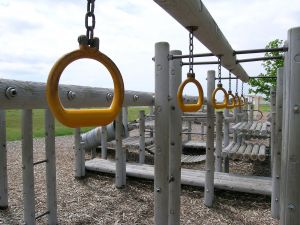
- Each year, more than 200,000 children in the U.S. are treated in emergency rooms for playground-related injuries.
- About 75% of all non-fatal playground-related injuries occur on public playgrounds, mostly at schools and daycare centers.
- Playground-related injuries cost an estimated $1.2 billion in 1995.
- Girls are more prone to playground-related injuries than boys (55% to 45%, respectively).
- The most at-risk age group for playground-related injuries are children ages 5 to 9.
- Swings are responsible for the most injuries on home playgrounds, while climbing apparatus is the most dangerous equipment on public playgrounds.
- Playgrounds in low-income areas in New York City have more maintenance-related hazards than those in high-income neighborhoods. For example, trash, rusty play equipment, and damaged fall surfaces were found to be more common in poorer communities than in wealthy areas.
We all want to keep our children safe and secure and help them live to their full potential. Knowing how to prevent leading causes of child injury, like falls, is a step toward this goal.
Falls are the leading cause of non-fatal injuries for all children ages 0 to 19. Every day, approximately 8,000 children are treated in U.S. emergency rooms for fall-related injuries. This adds up to almost 2.8 million children each year.
Thankfully, many falls can be prevented, and parents and caregivers can play a key role in protecting children.
Prevention Tips
The following are tips that can be used to prevent children from sustaining injuries related to falls:
Play safely. Check to make sure playground equipment your child uses is properly designed and maintained and there’s a safe, soft landing surface below.
Make home safety improvements. Use home safety devices, such as guards on windows that are above ground level, stair gates, and guard rails. These devices can help keep a busy, active child from taking a dangerous tumble.
Keep sports safe. Make sure your child wears protective gear when playing active sports, such as wrist guards, knee and elbow pads, and a helmet when in-line skating.
Supervision is key. Supervise young children at all times around fall hazards, such as stairs and playground equipment, whether you’re at home or out to play.
Carbon Monoxide Poisoning-is your Family Safe
If you have fuel burning appliances in your home, you owe it to your family to have CO detectors installed. Carbon monoxide detectors are great devices to use when fuel-burning appliances are used in the home. They can be very useful for keeping watch on the CO levels in the home.
Carbon monoxide (CO) can be a sneaky killer, it’s colorless, odorless, poisonous gas that forms from incomplete combustion of fuels, such as natural or liquefied petroleum gas, oil, wood or coal.
• 170 people on average in the United States die every year from CO produced by non-automotive consumer products. These products include malfunctioning fuel-burning appliances such as ranges, water heaters, furnaces and room heaters; engine-powered equipment such as portable generators; fireplaces; and charcoal that is burned in homes and other enclosed areas.
What are the symptoms of CO poisoning?
Because CO is odorless, colorless, and otherwise undetectable to the human senses, people may not know that they are being exposed. The initial symptoms of low to moderate CO poisoning are similar to the flu, but without the fever.
They include:
Headache
Fatigue
Shortness of breath
Nausea
Dizziness
High level CO poisoning results in progressively more severe symptoms, including:
Mental confusion
Vomiting
Loss of muscular coordination
Loss of consciousness
Ultimately death
The severity of the symptom is related to both the CO level and the duration of exposure. For slowly developing CO problems within the home, occupants and/or physicians can mistake mild to moderate CO poisoning symptoms for the flu, which sometimes results in tragic deaths. For rapidly developing, high level CO exposures, the victims can rapidly become mentally confused, and can lose muscle control without having first experienced milder symptoms; they will likely die if not rescued.
•Many experts believe that CO poisoning statistics understate the problem. Because the symptoms of CO poisoning mimic a range of common health ailments, it is likely that a large number of mild to mid-level exposures are never identified, diagnosed, or accounted for in any way in carbon monoxide statistics.
•Out of all reported non-fire carbon-monoxide incidents, 89% or almost nine out of 10 of them take place in a home.
Handling a CO emergency
Let’s say you and your family are home when the CO detector goes off. What do you need to do in a situation when you notice the CO levels rising in your home? A CO detector will sound in the same way as a smoke alarm alerting residents to evacuate the premises. A detector with a low level indicator is recommended because it is more sensitive to any rise in CO, no matter how slight. It can best prevent residents from developing carbon monoxide poisoning.
If the alarm signal sounds do not try to find the source of the CO:
Immediately move outside to fresh air.
Call your emergency services, fire department, or 911.
After calling 911, do a head count to check that all persons are accounted for. DO NOT reenter the premises until the emergency services responders have given you permission. You could lose consciousness and die if you go in the home.
If the source of the CO is determined to be a malfunctioning appliance, DO NOT operate that appliance until it has been properly serviced by trained personnel.
Federal Pacific Electrical Panels
Article came out in the Dallas paper to aware homeowners about these defective panels. These panels can be located anywhere around the Dallas/Fort Worth areas. These panels have been around for sometime. Some have not had any issues YET. I’ve reported on many of these panels to be replaced during home inspections in Arlington, Fort Worth, Mansfield, Burleson, Aledo and other areas. It’s possible you are not even aware of having these federal pacific stab loc panels. If you need help identifying your electrical panel, send me a note. Might be able to help!! KEEP YOUR FAMILY SAFE!!
Read the full article below
Link to Dallas Morning News Article
Homeowner Tips on Saving Energy
Being a Fort Worth and Dallas area home inspector has taught me some simple methods homeowners can perform to help reduce your energy bills.
Homeowners can easily conduct a simple home energy audit for themselves to find and repair obvious issues. With a simple walk-through, you can spot many problems within the house.
Locating Air Leaks
It’s possible to save 5% to 30% per year in energy savings from reducing drafts in a home, and the home is generally much more comfortable afterward. Homeowners can check for indoor air leaks, such as gaps along the baseboard or edge of the flooring, and at junctures of the walls and ceiling. Air might be flowing through places such as:
•electrical outlets;
•switch plates;
•window frames;
•baseboards;
•weatherstripping around doors;
•fireplace dampers;
•attic hatches; and
•wall- or window-mounted air conditioners.
Gaps around electrical outlets, pipes and wires, foundation seals should be checked. Caulking and weatherstripping should be applied properly, leaving no gaps or cracks, and should be in good condition.
Homeowners can inspect windows and doors for air leaks. If they rattle, they probably leak air. If there’s daylight around a door or window frame, then the door or window leaks.
Here’s an easy way to help locate the leaks within your home by performing a pressurization test:
1.First, close all exterior doors, windows, and fireplace flues.
2.Turn off all combustion appliances, such as gas-burning furnaces and water heaters.
3.Then turn on all exhaust fans (generally located in the kitchen and bathrooms), or use a large window fan to suck the air out of the rooms.
This test increases infiltration through cracks and leaks, making them easier to detect. My favorite thing to use is Incense sticks. If incense sticks are used, moving air will cause the smoke to waver and if you pick the right scent, smells good. You could also mist your hand to locate these leaks and if a damp hand is used, any drafts will feel cool.
On the outside of the house, a homeowner can inspect all areas where two different building materials meet, including:
•all exterior corners;
•where siding and chimneys meet; and
•areas where the foundation and the bottom of exterior brick or siding meet.
Holes or penetrations for electric outlets, wiring, faucets, and pipes should be sealed and caulked. Cracks and holes in the mortar, foundation, and siding should be found and sealed with an appropriate material. The exterior caulking around doors and windows should be checked to see whether exterior storm doors and primary doors seal tightly.
Insulation
If the insulation levels are less than the recommended minimum, heat loss through the ceiling and walls in a home could be extensive . When the house was built, the builder likely installed the amount of insulation recommended at that time. Given today’s energy prices (and future prices that will probably be higher), the level of insulation might be inadequate, especially if the home is older.
I see attic hatches that are inside the conditioned home left unattended and loss of energy is abundant. If the attic hatch is located above a conditioned space, it should be as heavily insulated as the attic, weatherstripped, and closed tightly. In the attic, the openings for items such as pipes, ductwork, and chimneys should be sealed. Any gaps should be sealed with an expanding foam caulk or some other permanent sealant.
The attic vents should not be blocked by insulation. Electrical boxes in the ceiling should be sealed with flexible caulk (from the living room side or attic side). Also, the entire attic floor should be covered with at least the current recommended amount of insulation.
Heating/Cooling Equipment
The homeowner should inspect the heating and cooling equipment annually, or as recommended by the manufacturer. If the HVAC system is a forced-air furnace, the air filters should be checked and replaced as needed. Generally, they should be changed about once every month or two, especially during periods of high usage.
Have a professional check and clean the equipment once a year.
If the unit is more than 15 years old, the homeowner should consider replacing the system with one of the newer, energy-efficient units. A new unit would greatly reduce their energy consumption, especially if the existing equipment is in poor condition.
Lighting
Energy for lighting accounts for about 10% of an electric bill for a typical residential house. A homeowner could check the wattage size of the light bulbs in the house. There may be 100-watt (or larger) bulbs where 60 or 75 watts would do. Homeowners should also consider compact fluorescent lamps for areas where lights are on for hours at a time. Their electric utility may offer rebates or other incentives for purchasing energy-efficient lamps.
You can contact your utility company to see if they offer free or discounted energy audits to their customers. In many states across the country, homeowners can get a free energy audit. If not, they can hire a home energy professional to evaluate the home’s energy efficiency.