
Blog
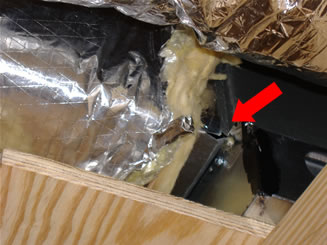
Is your A/C Duct Leaking
Fort Worth Dallas Home Inspector on Leaking A/C Ducts.
Central heating and cooling systems use an air distribution or duct system to circulate heated and/or cooled air to all the conditioned rooms in a house. Even when properly designed, duct systems must be installed correctly to be efficient, maintain uniform temperatures throughout the house, operate quietly, and not adversely impact comfort or indoor air quality
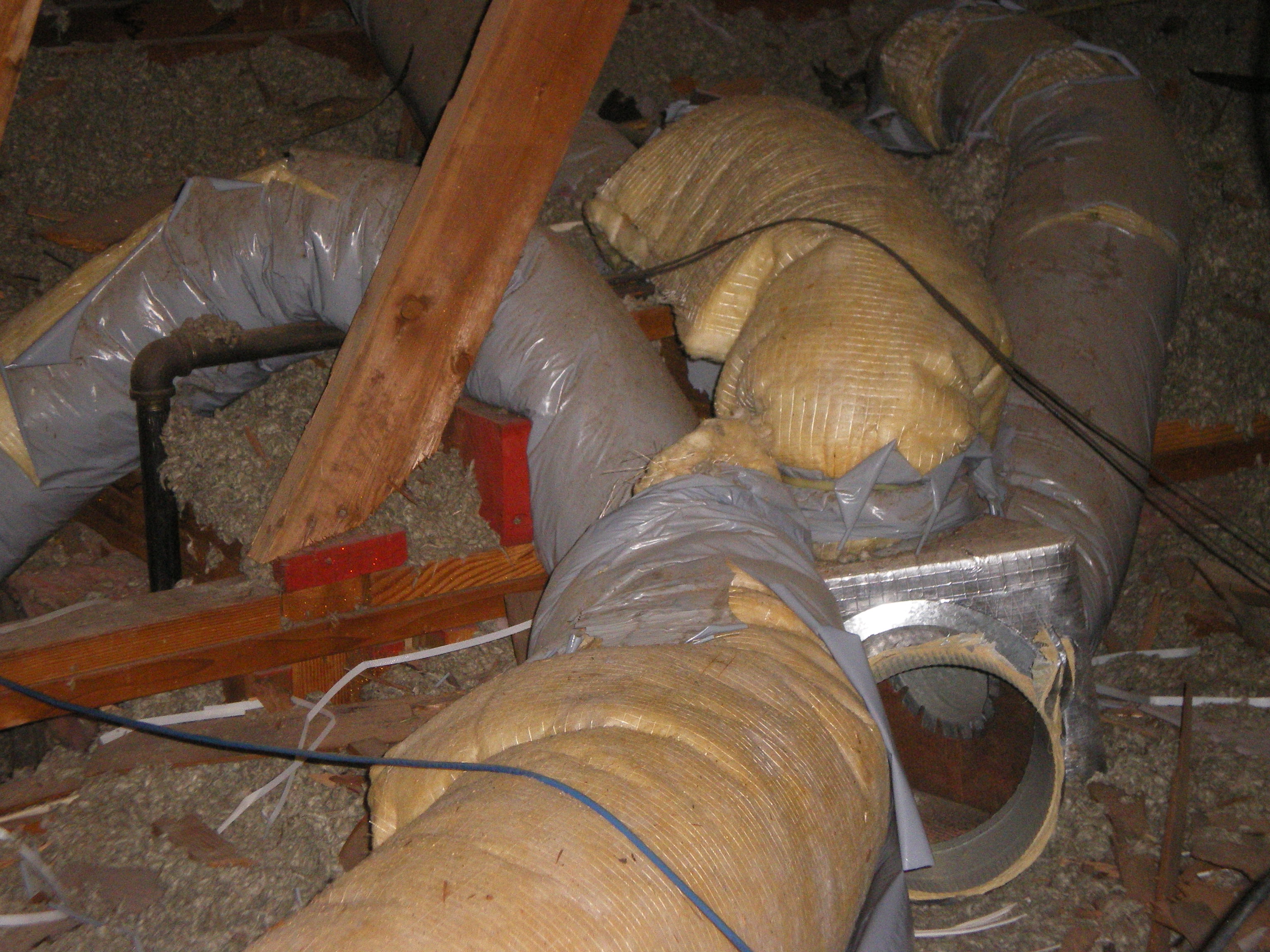
At Leahy’s Inspections we look the system over and if the duct work is bad and leaking, I make the recommendation to repair or replace it.
Make sure ducts are properly sealed and insulated in all non-air-conditioned spaces running from our air conditioners and heating systems.
Duct leaks can be sealed using mastic or acrylic-adhesive foil tape. Mastic adheres well to most surfaces and provides an effective long-term seal. Mastic alone may be used to seal cracks less than ¼” wide. Foil tape carries a 20-year guarantee if applied properly.
Any sealant should carry the Underwriters Laboratory rating (UL-181)specific for that particular type of duct. Most duct manufacturers are now listing the closure products that they allow to be used with their ducts.
If your ductwork is uninsulated, consider adding 1½” to 3″ of insulation and wrapping with an exterior vapor retarder. Some building codes require that ductwork have a minimum insulation value.
If you see the contractor bringing in duct tape, hire someone else. In the past, many systems were sealed with a gray, rubber-adhesive, cloth duct tape. This tape will eventually fail due to its short-lived rubber-based glue. If you see this kind of tape in an existing home, be sure to check all areas where it is attached to the ducts.
WHY DUCT INSTALLATION AND SEALING ARE IMPORTANT
The efficiency of air distribution systems has been found to be 60-75% or less in many houses because of insufficient and/or poorly installed duct insulation and leaks in duct systems. Properly designed and installed duct systems can have efficiencies of 80% or more for little or no additional cost, potentially saving a homeowner $50-200 or more per year in heating and cooling costs. Duct systems that leak and/or do not distribute air properly throughout the house may make some rooms too hot and others too cold.
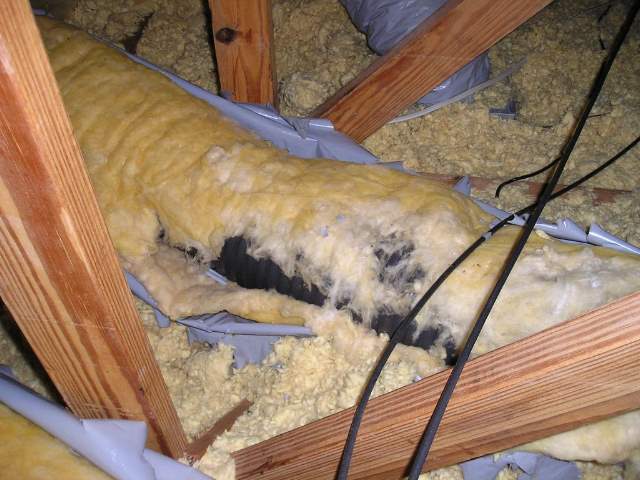
Leaky and unbalanced duct systems force conditioned air outside and unconditioned air into the house. This increases heating and cooling costs and may also draw humidity, dust, mold spores, and other contaminants into a home from the attic, crawlspace, or garage and radon’s. Most air conditioning and heating systems require some form of duct work to channel or direct the air to places in the dwelling where the conditioned air is needed.
There are many types of duct work available and often times the duct work can make a big difference in your utility bills. For that reason, it is important that the duct work is installed correctly by qualified installation technicians. A poor installation job will result in poor performance, bad air flow, leaky duct work systems, and higher than usual utility bills. It is important that you have qualified people design and install your system from start to finish so that you get the best and highest performing duct work system money can buy. It is also critical that the air conditioning duct work system be designed for the air conditioning load.
In need of a home inspection call Tom with Leahy’s Inspections @ 682-429-8026
Cleaning and Maintaining your Jetted Tub
I recently performed my routine maintenance on the jacuzzi tub we have in the master bath. I thought I would share some of the tips I’ve picked up during my home inspection career. I’m always seeking to better my knowledge on questions that may come up during one of my home inspections.
All whirlpool bathtubs have a small amount of residual water left in the pipeline. Minerals in water begin a process of calcifying around the insides of your pipes. This hard scale build up not only restricts water flow, but becomes a perfect breading ground for infectious bacteria. As the algae breaks off, you will see it in your bath water as ugly black flecks.
While there are certain necessary procedures to maintaining your whirlpool tub, they’re nothing that will be too difficult to complete. Proper use and maintenance will ensure your tub can be enjoyed for many years.
The best product that I recommend using is called ahh-some bio cleaner. It is safe for the environment and for human ingestion (when used in water vessels for bio cleaner), eradicates the harmful bacteria, mold spores, algae, oils and gunk on the walls of the jetted tub piping. Also has no damaging affect on the rubber seals around the pump motor.
Here’s how to maintain your jetted tub with ahh-some or just normal household products.
- Determine your usage. If you use your tub regularly, then more regular monthly cleaning and maintenance is going to be necessary. If you only use your tub occasionally, maintenance every three to four months will be adequate.
-
Step 2
Set air control knobs. If your tub has this feature, make sure they are closed.
-
Step 3
Fill tub. Fill the tube high enough so that it reaches nearly two inches above the highest jets. This water doesn’t have to be hot, but it will be more effective if it’s at least warm.
-
Step 4
Add a cleaning solution. Add two tablespoons of dishwasher detergent to the tub of water. This can be regular detergent that you would use in your dishwasher. Powder or liquid will work.
-
Step 5
Run the whirlpool. Turn the tub’s jets on and let it run for 15 to 20 minutes. This lets all the soapy water run through the tub’s plumbing system to clean out any residue in the pipes.
-
Step 6
Drain and rinse. Allow the tub to drain normally, rinse the tub out and then clean the tub itself with a non-abrasive cleanser.
-
Step 7
Use bleach in the next cleaning. Add 1/2 cup of regular, household bleach to the water when you clean the tub next time. Never use to much bleach, even though it is somewhat effective in killing some germs and algae, it also breaks down the rubber seal on you pump motor which can create a leaky tub and possible water damage.
The only other way to eliminate the buildup within the pipes is to avoid high sudsing soaps, bath salts, mineral salts or bubble bath. Who wants a jetted tub and use fresh water only. That’s why its very important to kept your jetted tub maintained so it will last and keep you from spending unnecessary money having repaired or worst case replaced.
Hope this is useful for someone!!
Caring for your Landscaping during Heat Wave
During the hot Texas summer heat waves, all our hard work from the spring can go right out the window on our lawn and landscapes. Extra care needs to be done in order to keep the plants in our landscapes alive during the summer and especially during a heat wave. Here are some tips to keep your plants healthy and help them survive a heat wave.
Water, of course, is essential to keep your plants alive. If you are used to watering once a week, you will need to increase that to twice, and possible three times a week.
Note that young plants and trees that were planted during the spring will need extra care. Where a full grown older tree can go a weeks without any watering, a young tree still needs help. Water them every 2-3 days.
Potted plants need to be watered every day. They should be fine in the summer sun, but if there is a heat wave it may be necessary to provide shade for your potted plants or move them under a tree, until the heat wave passes. Because the potted plants are young and because the pot causes the soil to dry out they need to be tended to every day.
Mulch on your plants keep the soil from drying out and helping you to cut back on your watering. The thicker the mulch the better. You should have mulch on your potted plants, too. Another trick is to group your potted plants together and pile mulch around the outside of the pots.
During the summer do not fertilize your plants. The plants will slow their growth down during the hot days, to fight the heat and you do not want to put fertilizer on them to encourage them to grow.
Some rules for watering lawns with heavy clay is to water more frequently for shorter periods of time. If you have an automatic sprinkler system, adding time usually just runs water off of the lawn and into the street. On your controller there are 3 or 4 separate start times that you can set up to run at night. For example, run a lawn zone for 5 to 10 minutes or until the water starts to run off. Sometimes it will only take 3 or 4 minutes, but the problem is that you need more time to saturate into the soil. In this case, set up 2 or 3 more start times at short intervals and run them through the night at different times to allow water to soak into the soil.
Plants are different. I usually set our controllers to operate 2 or 3 times per week, watering down to the roots for say 10 to 15 minutes and don’t water again for at least a day or maybe even 2 to 3 days later. Remember, too much water can damage your plants.
Do You Have Bed Bugs
When people think about blood sucking insects, they first picture a mosquito or tick. Did you know bed bugs are also blood suckers. 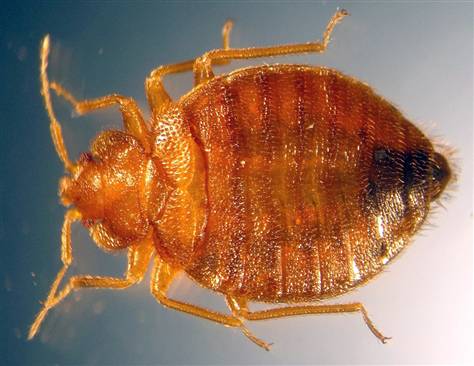 The tiny, sneaky insects are spreading so rapidly across the United States that almost no region or area is unbitten, a new survey suggests. The United States has seen a 50-fold increase in bed bug infestations over the last five years, according to the National Pest Management Association. An entomologist told MSNBC, “It’s like the return of the wooly mammoth,” as many of his peers had previously never seen a single bed bug in their careers. The outbreak has affected most parts of North America and Europe, especially in urban areas. Most cities have bed bug problems today,” says Michael F. Potter, University of Kentucky professor of entomology and one of the co-authors of the study. “Any place you have a lot of people, or a lot of movement of people, you have bed bugs.
The unpleasantness of a typical rodent or insect extermination is largely the fee charged by the exterminator. But with bed bugs, this fee is just one piece of a greater nightmare. Because bed bugs are adept at hiding almost anywhere, an alarming quantity of possessions, from curtains to books and picture frames, must be discarded or quarantined. In one posh New York City rental tower, a tenant was forced to part with carpets, bedding, curtains, 20 cashmere sweaters, an Armani suit, a couch, a headboard, a night table, a bedframe, and an exercise bike, according to the New York Daily News. Other victims have had to throw away their books unless they were willing to inspect each one, page by page. Some possessions may be salvaged if they are sealed in special casing long enough for the bed bugs to die, which can takes many months. During this time, residents may be forced to move to temporary housing elsewhere. “There are still an amazing number of people that think bed bugs are some kind of folklore,” he says. “Or, if they do know about them, they think it’s due to poor hygiene, or it’s a problem that only affects the lower classes.”
Fortunately, the health dangers posed by bed bugs seem to be limited to temporary skin irritation and inflammation, akin to mosquito bites. There are no known cases of disease transmission from bed bugs to humans, despite the fact that the parasites seem similar to other parasites that do transmit disease, such as fleas and ticks. 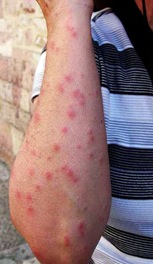 Anaphylactic shock, however, may be experienced by a small percentage of the population, and measures should be taken to prevent bacterial infection of bitten areas.
Hidden, until it’s too late
From there the stealthy bugs took hold and spread. Bed bugs don’t live on people, but they can hitchhike around in suitcases, purses, backpacks and computer bags. Because they hide during the day and feed on you painlessly while you sleep, they are very difficult to detect.
In addition, it takes about a week before an allergic reaction to the bites appears, so it can be hard to know exactly where the encounter took place. Roughly 30 percent of people living with infestations don’t develop an allergic reaction until being attacked multiple times, researcher Potter says. And since people simply aren’t expecting them outside urban areas, it can take while to identify bedbugs as the cause.
That gives the pesky insects a three- to four-month head start on any efforts to control them, a significant lead for critters who lay lots of eggs and whose eggs hatch in about two weeks. 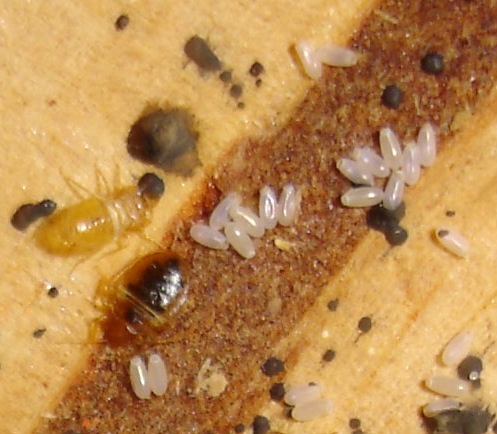
Getting rid of bed bugs is difficult even for professionals, who rate them far more difficult to deal with than ants, termites or cockroaches. Effective treatments are available, but they’re expensive and time-consuming. A thorough inspection to detect bedbugs can involve specially trained dogs, followed by an application of pesticide and then a heat or cold treatment to kill eggs, which no chemical can currently do. The cost can be anywhere from $800 to $1,200 or more for a one-bedroom apartment, a steep price tag in the midst of a tough economy.
A new product is out that claims to get rid of bedbugs and is completely safe to humans and animals.
“Mother Earth D Bedbug Insect Control Dust”
Bed Bug & Pest Killer- All Purpose Diatomaceous Earth Powder Insecticide Kills Bedbugs, Bugs & Insects on Contact
http://www.plusnaturalenzymes.com/index.htm
Human & Pet Safe
So when you say to your kids….”Don’t let the bed bugs bite” They just might be!!
Inspecting with a Moisture Meter
A moisture meter is a device designed to measure the moisture content of various building materials, such as roofing, siding, insulation, drywall, plaster, wood, tile and fiberglass. Structural and safety hazards, such as mold, rot and decay are all potential consequences of elevated moisture levels in these materials. An inspector can use a moisture meter to locate moisture that would not otherwise be apparent.
Here are a few ways that inspectors may find moisture meters useful:
•A moisture meter can be used to determine whether a material is moist enough to allow mold to grow. Mold will begin to accumulate on surfaces that contain approximately 20% moisture, although this value varies based on vapor pressure and other factors.
•An inspector can test the moisture level of a section of building material that appears to be dry, in order to establish a baseline from which other measurements can be compared.
Moisture meters can also be useful in the following applications that are not related to inspection:
•If a home has been vacated due to flooding, a moisture meter can be used to determine if the home is once again suitable for occupancy.
•Before a home is purchased, an inspector can use a moisture meter to determine if the house has leaks.
•A moisture meter can assist a homeowner in determining whether wood is dry enough to be painted or stained.
•Wood installers use moisture meters to make sure that wood is dry enough to be installed.
Modes of Operation
Moisture meters come in two different varieties known as pin type and search mode. They are each suited to different applications, and InterNACHI believes that the best meters contain both options.
Pin Type
This mode is used to measure the moisture content of a material’s surface, or at an incremental depth using probes. While in this mode, the meter can measure the amount of moisture on a material by its electrical conductivity. This is often regarded as a more repeatable and accurate type of moisture measurement than the “search mode” described below, although intermittent wet spots in the wood may be missed by pin type meters. This method can be used to test for moisture on the surface of building materials, such as stucco, drywall, plaster or wood. It is especially useful for determining if the source of a stain on a wall or ceiling is active, or if it has been repaired.
Probes of varying lengths and designs may be used to extend the reach of a moisture meter operating in this mode. They are slender metallic poles with sensitive tips that extend the reach of the meter’s electrodes. Delmhorst makes probes that can be inserted deep into the straw in straw homes to measure its moisture content. Hammer probes can be driven into wood and then extracted. Other probes can be inserted into pre-drilled holes in masonry, or pushed through insulation. Moisture content in log homes can be measured by inserting a probe two-thirds of the way from the log’s surface to its center.
Search Mode
Search mode, also known as pinless mode, detects and measures moisture content beneath the surface of a material. Meters in this mode emit electromagnetic waves (usually radio waves or an electrical current) that are affected by the presence of moisture. The meter can detect changes in the characteristics of returned emissions and then use this information to calculate moisture content. Meters manufactured by Tramex, for instance, operate by the principle that a material’s impedance (resistance) to an electrical current varies inversely with that material’s moisture content. The instrument determines the amplitude of a low-frequency alternating current, and uses this information to calculate moisture content. Other meters, such as those manufactured by Protimeter and Wagner, detect the characteristics of emitted radio waves in order to determine the presence of excess moisture. These meters detect the amplitude of returning waves, which is diminished when they come in contact with water.
The actual depth that these waves travel varies based on the material’s properties and the device’s settings, but they generally penetrate from ½” to ¾” beneath the surface and are unaffected by surface moisture. Unlike the pin type, this mode of operation arrives at a relative value for moisture content that must be calibrated, using an external equivalency table in some models. The meter will display moisture content as a scale of color-coded lights that indicate whether the material is damp, dry, or in a borderline condition. In other models, such as those made by Wagner, the default setting can be used to approximate moisture content in most materials, although dense materials, such as cement, will require adjustment of the device’s controls. In addition, Wagner’s meters take a three-dimensional moisture average of the wood, which decreases the likelihood that intermittent wet spots will be missed.
Search mode is commonly used in the following locations:
•the sides and the base of a tub or shower. Any penetrations, such as faucets, showerheads and soap dishes, are likely locations of water leaks. The water can originate from internal plumbing behind the wall, or from the shower itself.
•water that has escaped from a dishwasher into surrounding kitchen materials.
•the sub-floor beneath a bathroom’s tile floor. Water intrusion can cause enough damage there that the toilet becomes detached.
•peering behind a wall or floor covering, such as a vinyl floor or a tile wall.
False Readings
If metal is present within the penetrating range of the meter, it will alter wave characteristics in ways similar to water. The meter will report levels of moisture that are higher than the actual level of the material if it detects a copper wire, a metal pipe, or some other metallic substance. If an inspector suspects that the meter is sensing metal, s/he can monitor the readings as s/he moves the meter in a straight line away from the elevated reading area. The straight outline of a copper wire or metal pipe can usually be traced in this fashion.
In summary, moisture meters are capable of detecting moisture levels in most building materials. They are useful tools to have during home inspections because they can calculate the properties of inaccessible locations without causing them any damage. Two types of moisture meters are available, sometimes in the same model.